
Shop All

![Hochiki Addressable Analogue Heat Sensor]()
![Hochiki Addressable Analogue Heat Sensor]()

Infinity ID2 60° Fixed Heat Detector
From £29.40 excl. VATUnit price excl. VAT /Unavailable
Black Infinity ID2 60° Fixed Heat Detector
From £32.67 excl. VATUnit price excl. VAT /Unavailable-
Black Infinity ID2 Rate of Rise Heat Detector
From £32.67 excl. VATUnit price excl. VAT /Unavailable -
Infinity ID2 90° Fixed Heat Detector
From £29.40 excl. VATUnit price excl. VAT /Unavailable -
Infinity ID2 Rate of Rise Heat Detector
From £29.40 excl. VATUnit price excl. VAT /Unavailable -
Fyreye MKI Addressable Opto Heat Detector
£38.78 excl. VATUnit price excl. VAT /Unavailable -
Fyreye MKI Addressable Heat Detector
£35.55 excl. VATUnit price excl. VAT /Unavailable -
Fyreye MKII Addressable Rate of Rise Heat Detector with Built In Isolator, Black
£30.12 excl. VATUnit price excl. VAT /Unavailable -
Fyreye MKII Addressable Fixed Heat (CS) Detector, Black
£28.13 excl. VATUnit price excl. VAT /Unavailable -
Fyreye MkII Addressable Fixed Heat Detector, Black
£26.71 excl. VATUnit price excl. VAT /Unavailable -
Fyreye MKII Addressable Rate of Rise Heat Detector, Black
£26.13 excl. VATUnit price excl. VAT /Unavailable -
Fyreye MKII Addressable Fixed Heat (CS) Detector
£25.45 excl. VATUnit price excl. VAT /Unavailable 
Fyreye MKII Addressable Rate of Rise Heat Detector
£23.44 excl. VATUnit price excl. VAT /Unavailable-
£23.11 excl. VATUnit price excl. VAT /Unavailable
-
Hochiki ESP Analogue Addressable Waterproof Multi Heat Detector ACB-EW
From £50.45 excl. VATUnit price excl. VAT /Unavailable




General Information
Learn More about Addressable Heat Sensors
Learn More about Addressable Heat Sensors
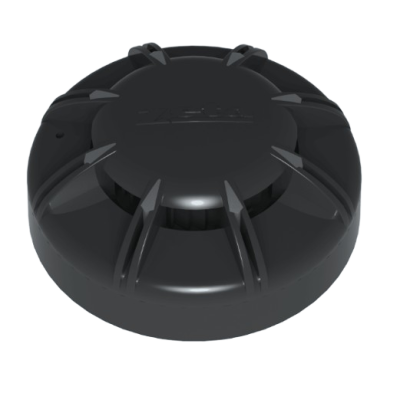
The addressable heat sensors from Inbuild UK offer dependable heat detection with smart functionality for contemporary fire alarm systems. The sensors operate in environments where smoke detection becomes impractical such as kitchens, plant rooms, car parks, and dusty areas to provide precise temperature-based fire detection for early warning and system reliability.
The sensors maintain individual addressability which enables the control panel to pinpoint the exact device that initiates an alarm or fault condition. The exact location data provided by these sensors helps emergency responders and maintenance personnel to conduct swift investigations and execute precise actions when dealing with fires or system maintenance tasks. The detectors implement sophisticated thermal sensors which track temperature changes and fixed temperature points to differentiate between typical temperature variations and rising heat caused by fires.
The addressable heat sensors from Inbuild UK fulfill BS EN 54-5 standards for point-type heat detectors and meet requirements for BS 5839-1:2017 system installation standards to support UK Building Regulations (Approved Document B) and the Regulatory Reform (Fire Safety) Order 2005.
The sensors function through an addressable loop network which carries both power supply and data signals through one electrical path. The system design decreases installation complexity and enables continuous device-to-panel communication through a single circuit. The built-in diagnostic features along with status indicators simplify testing and maintenance procedures which helps building managers fulfill their inspection and maintenance obligations under the Fire Safety Order.
The sensors employ built-in algorithms which adapt their sensitivity levels according to environmental conditions to prevent unnecessary alarms from normal heat sources and environmental changes. The units maintain reliable operation in environments with airborne particles and vapour which could otherwise cause false smoke detections.
The addressable heat sensors from Inbuild UK serve multiple applications including commercial kitchens, boiler rooms, factories, car parks, warehouses, and mixed-use developments. The sensors function as vital components of addressable fire detection systems to provide early heat-based fire alerts which enable safe building evacuations.
Inbuild UK provides addressable heat sensors that use precise thermal detection and digital communication and meet UK standards to deliver dependable operation with minimal false alarms and extended system lifespan for all building construction needs.
Frequently Asked Questions
What does a fire control panel do?
What does a fire control panel do?
A fire control panel (also known as a fire alarm control panel or FACP) is the central hub of a building’s fire detection and alarm system. A fire control panel is essential for early fire detection, effective evacuation, and minimising property damage. Here’s what it does:
- Monitoring: The panel continuously monitors connected devices, such as smoke detectors, heat detectors, and manual call points, for signs of fire.
- Alerting: When a fire is detected, the panel activates alarms (e.g., sounders and strobes) to alert occupants and initiate evacuation.
- Controlling: It can activate other fire safety systems, such as smoke control systems, fire dampers, or sprinklers, to manage the fire and protect escape routes.
- Communication: The panel can send signals to emergency services or monitoring centres, ensuring a rapid response.
- Diagnostics: It provides information about the system’s status, including faults or maintenance requirements, ensuring the system remains operational.
Where should a fire control panel be located?
Where should a fire control panel be located?
For optimal effectiveness and compliance with UK fire safety regulations, the placement of a fire control panel is paramount. Proper placement is crucial for ensuring quick access and operation in a fire, thereby safeguarding both lives and property. Key guidelines for its location include:
- Accessibility: The panel should be easily accessible to firefighters and building managers, typically situated near the main entrance or within a secure area.
- Protection: It must be in an area shielded from fire and smoke to guarantee continued operation during an emergency.
- Clear Identification: The panel requires clear signage indicating its purpose and location, enabling rapid identification by emergency responders.
- Regulatory Compliance: Its placement must adhere to BS 5839-1:2017 (Fire Detection and Alarm Systems for Buildings) and the Regulatory Reform (Fire Safety) Order 2005.
What are the types of fire alarm control panels?
What are the types of fire alarm control panels?
Fire alarm control panels come in several types, each suited to different building sizes and requirements:
- Conventional Panels:Divide the building into zones. When a device is triggered, the panel indicates the zone but not the exact location.
Best for: Smaller buildings with simple layouts.
- Addressable Panels: Provide precise information about the location of the triggered device (e.g., specific room or area).
Best for: Larger or more complex buildings, such as offices, hospitals, or schools.
- Wireless Panels: Use wireless communication between devices and the panel, reducing the need for extensive wiring.
Best for: Historic buildings or sites where wiring is impractical.
- Hybrid Panels: Combine wired and wireless systems, offering flexibility for buildings with mixed requirements.
How much does a new fire alarm panel cost?
How much does a new fire alarm panel cost?
The cost of a new fire alarm panel depends on several factors, including the type of panel, the size of the building, and additional features. Investing in the right fire alarm panel ensures compliance with UK fire safety regulations and protects lives and property. Here’s a breakdown:
Conventional Panels:
- Cost: £500 to £2,000.
- Best for: Small buildings with simple layouts.
Addressable Panels:
- Cost: £2,000 to £10,000+.
- Best for: Larger or more complex buildings.
Wireless Panels:
- Cost: £3,000 to £15,000+.
- Best for: Buildings where wiring is impractical.
Additional Costs:
- Installation: £1,000 to £5,000+.
- Maintenance: £100 to £500 annually.
- Upgrades: Costs vary depending on the system’s complexity.
Where are addressable heat sensors used?
Where are addressable heat sensors used?
The devices operate in areas where smoke detection systems fail to function properly including kitchens, boiler rooms, car parks, mechanical plant spaces, and environments with high dust or steam concentrations
What standards do Inbuild UK heat sensors comply with?
What standards do Inbuild UK heat sensors comply with?
The heat sensors from Inbuild UK meet BS EN 54-5 standards for testing and follow BS 5839-1:2017 system installation guidelines to fulfill Building Regulations (Approved Document B) and the Fire Safety Order 2005 requirements.
Can addressable heat sensors replace smoke detectors?
Can addressable heat sensors replace smoke detectors?
The devices serve as an alternative to smoke detectors in specific situations but they cannot replace traditional smoke detectors throughout all areas. The fire risk assessment process should identify which detection method between heat andsmoke sensors provides better protection for specific locations.
How often should heat sensors be tested and serviced?
How often should heat sensors be tested and serviced?
The recommended testing schedule for heat sensors includes weekly checks as part of system maintenance and professional servicing twice per year based on BS 5839-1 standards.
How are addressable heat sensors connected?
How are addressable heat sensors connected?
The digital communication circuit of these sensors operates as a power source and data transmission system which enables simple installation through reduced cabling needs.
What are the main benefits of using addressable heat sensors?
What are the main benefits of using addressable heat sensors?
The primary advantages of using addressable heat sensors include their ability to identify exact alarm locations and their resistance to false alarms from smoke and dust while minimizing cabling needs and enabling smooth integration with other addressable fire safety systems.
Brands